

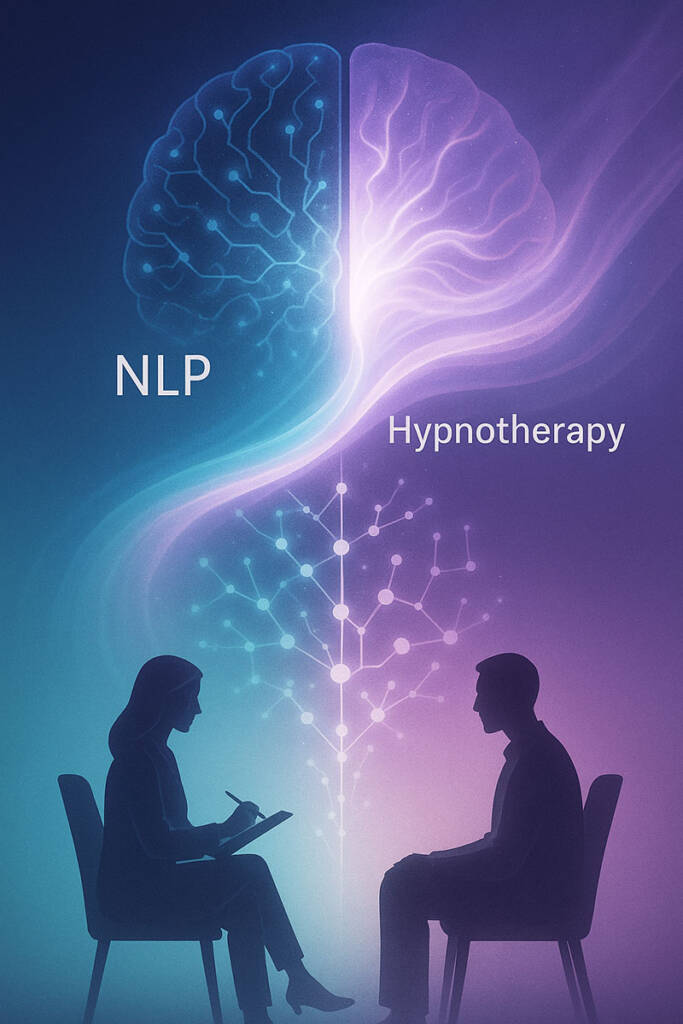
Hypnotherapy
Hypnosis is a natural, focused state of awareness in which the mind becomes more receptive to positive suggestions.
In hypnotherapy, evidence-based practice plays an essential role in ensuring that the methods we use are both safe and effective.
Hypnotherapy is a field that can be evolved by the developments in psychology and neuroscience. Evidence-based practice allows us to align our methods with mainstream psychology, rather than presenting hypnosis as something mysterious or separate. It is important to see hypnosis as part of mainstream psychology, and applying evidence-based methods helps keep hypnotherapy aligned with respected therapeutic models like CBT.
Hypnosis is a skill that can be taught to anyone. Although responsiveness (low, medium, or high) varies from person to person, with training those who are less responsive can improve.
The most important skill for the client is self-hypnosis. The client’s focus, motivation, and cooperation are fundamental to successful hypnotherapy. The role of hypnosis is primarily to guide the client—more like coaching than controlling the mind—because it is essentially considered self-hypnosis. I always prefer my clients to be aware of what I am doing and how they are responding. It is becoming more aware and remain open to suggestions that we decide upon together.
Modern hypnotherapy is a structured, client-centred therapeutic practice. Its goal is to empower individuals to achieve psychological or behavioural change, within a safe and supportive environment. It is based on collaboration, trust, confidentiality, suggestibility and having the control during all the process.
Many clients have different definitions of hypnotherapy in their minds. Some of these come from their previous hypnotherapy experiences, stage hypnosis, or portrayals in films and books. Stage hypnosis often leads people to believe that the therapist takes control of the person and can make them do whatever the therapist wants.
Hypnosis is a collaborative process in which I guide, and you imagine, positively influencing your emotions and rehearsing your behaviours. You remain fully aware, focused, and open to suggestions, deciding for yourself which ones you wish to accept.
A hypnotic suggestion involves experiencing certain helpful ideas that directly influence your emotions and behaviours. The brain does not distinguish between what happens externally and what occurs in the mind, so imagination combined with suggestion helps bring about meaningful change.
As I mentioned earlier, my aim is to work collaboratively with the client and help them stay focused on the suggestions that we determine together with my support. My responsibility is to guide you in a safe and supportive way, helping you to overcome your challenges and achieve your goals. Each session is tailored to your individual needs, and all discussions remain strictly confidential.
Neuro-Linguistic Programming (NLP)
Neuro-Linguistic Programming, or NLP, explores how our thoughts, language, and behaviours interact to shape our experience of reality. It brings together three fundamental elements: the neurological processes through which we perceive the world, the language systems that give those perceptions meaning, and the behavioural programs that determine how we act and respond.
Through our nervous system, we receive and process every experience via the five senses. The way we describe these experiences — through words, tone, and non-verbal cues — gives them structure and emotional value. By understanding how this inner coding works, we can begin to reorganise our communication and mental patterns, allowing new outcomes and more aligned behaviours to emerge.
NLP is learning how human communication and perception function, and how they can be refined to create meaningful transformation. It views every thought, emotion, and action as part of a learnable structure. When we recognise these internal maps, we gain the ability to model, learn, and reshape them consciously.
As a practical methodology, NLP offers tools to help individuals understand their inner processes, communicate with clarity, and align their inner and outer worlds. It teaches that every behaviour has an underlying positive intention and that the way we interpret reality is often more significant than the content of reality itself.
NLP reminds us that “the map is not the territory.” Our perceptions are only representations of the world, not the world itself. By expanding awareness, we can bridge the conscious and unconscious mind, recognise the resources that already exist within us, and transform experiences into wisdom. Every result is seen as feedback rather than failure — an opportunity to grow, evolve, and refine our patterns toward greater coherence and authenticity.
Main Focus Areas
NLP can support various areas of personal and professional growth, such as:
- Reducing anxiety and phobias
- Building confidence and motivation
- Enhancing communication and relationships
- Managing stress and emotional triggers
- Overcoming limiting patterns and achieving goals